
Motion Painting - Academy Award
What Dreams May Come
- Year:
- 1998
Motion Painting
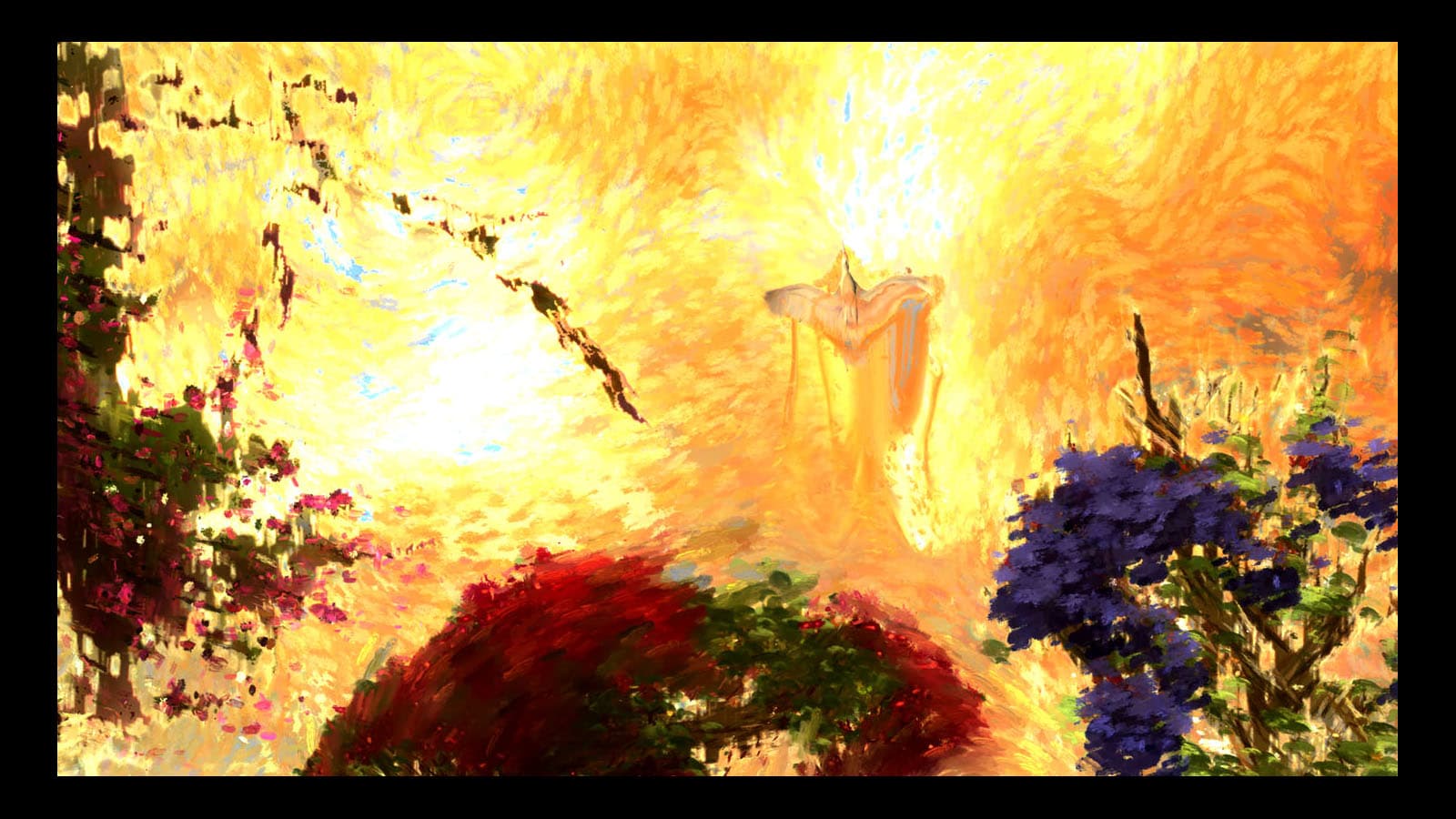
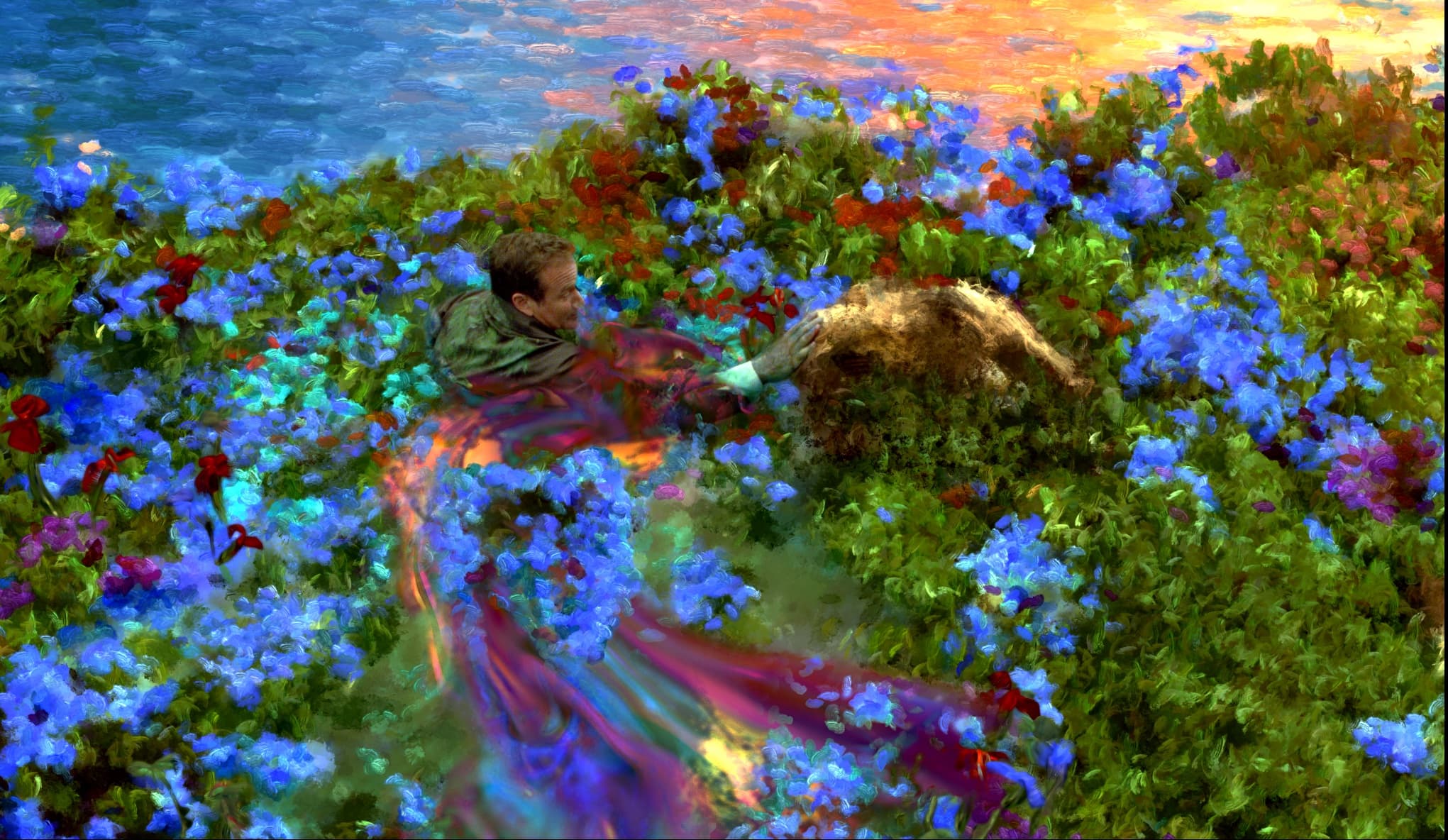
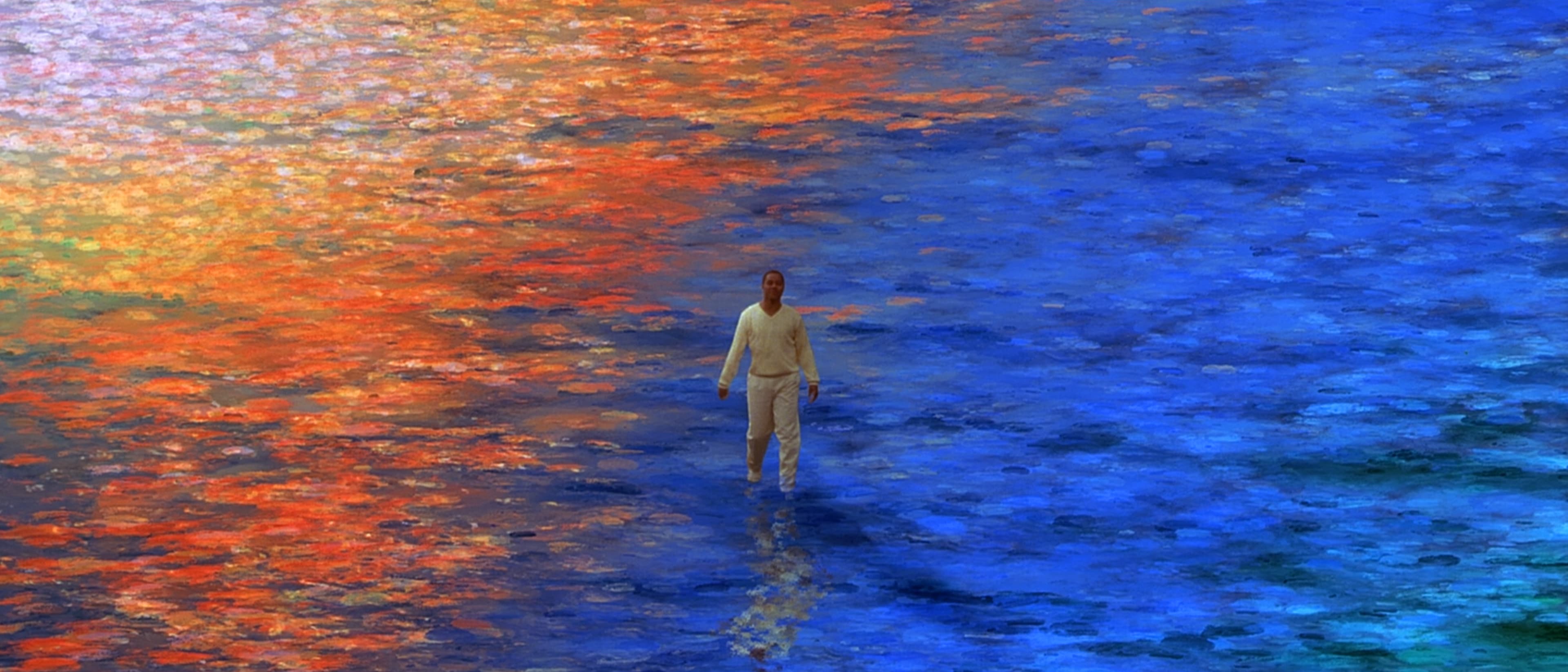
What Dreams May Come (1998) received an Academy Award for Visual Effects and is widely recognised for its pioneering use of the motion painting technique, which we developed specifically for the production.
The film sought to construct an afterlife imagined as a world of paintings—specifically, the protagonist’s vision of paradise shaped by memories of his late wife’s work as both a painter and a restorer of fine art. This concept required environments that were not only painterly in style but also dynamically alive: paintings in motion. The intention was for Robin Williams’ character to physically enter and explore a world literally created from his wife’s artistic imagination.
Creating convincing “paintings in motion” posed significant challenges—particularly in achieving the fluid movement of paint across water. I was inspired by Impressionist techniques, where individual brushstrokes shift with changes in light, tone, and colour, and sought to evoke that same kinetic sensitivity in a moving image.
At the time, no method existed for seamlessly blending live-action footage with animated, painterly textures. After testing early Kodak software that proved inadequate, we assembled a specialised team combining programmers, technicians, and painters skilled in both traditional and digital media.
Technically, our objective was to track individual pixels frame by frame and attach scanned paint strokes to them as they moved. Using adapted military image-tracking software—originally developed for missile guidance and later referred to as optical flow—we achieved this breakthrough. Additionally, LiDAR (Light Detection and Ranging) scanning was employed to capture detailed spatial data from live-action sets. This allowed the digital paint and light effects to move with remarkable precision through three-dimensional space, enhancing the illusion of an inhabitable, painterly world.
We began by filming real locations—such as the mountains of Montana—to anchor the imagery in a sense of reality. In post-production, we reconstructed each sequence by layering and tracking painted strokes according to light, color, and motion. The breakthrough came when the brushstrokes could adhere naturally to live-action elements, even in shots with complex movement. The result was a new aesthetic—a truly moving painting. Each frame, when slowed by thousands of percent, became an artwork in its own right: a spontaneous synthesis of cinematography and gestural paint.
This approach diverges from traditional animation, matte painting, rotoscoping, or scratch film. Motion painting stands as both a technical and artistic evolution—a vivid fusion of film and brushstroke that reimagines the boundaries between the painted image and the moving one.
Aesthetics
We set out to create imagery that captured the luminous colour of stained glass, drawing inspiration from painters as diverse as Claude Monet, Marc Chagall, and Maxfield Parrish for the film’s paradise sequences.
I was consciously avoiding the overused “white-on-white” aesthetic often associated with cinematic depictions of heaven. Instead, the goal was to build a visual language grounded in art-historical references—one that could express Robin Williams’ character's journey and emotional experience within this imagined afterlife.
Images